
Climate Fasting Campaign Launched with Inaugural Webinar
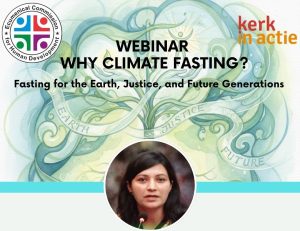
The Ecumenical Commission for Human Development (ECHD) launched a six-week Climate Fasting Campaign with an inaugural online webinar to promote ecological awareness, lifestyle change, and climate justice among Christian youth.
The campaign, themed “Fasting for the Earth, Justice, and Future Generations,” officially began on Feb. 23 with the webinar that brought together 34 participants from several cities, including Khanewal, Sargodha, Rawalpindi, Islamabad, Faisalabad, and Lahore.
ECHD project manager Kamran Chaudhry described the initiative as a faith-based response to environmental degradation, linking spiritual reflection with practical climate action.

Each week of the campaign focuses on a specific dimension of ecological responsibility — including consumption patterns, food systems, water and energy stewardship, transportation, climate justice, and long-term commitment.
Participants were encouraged to fast from harmful habits such as excessive consumption, waste, and convenience-driven lifestyles, while adopting sustainable practices and community-based action.
Human rights activist and ecological justice advocate Naureen Akhtar delivered the keynote address, emphasizing that climate fasting is rooted in spiritual renewal, ethical responsibility, and solidarity with vulnerable communities most affected by environmental crises.
She said people of faith have a special responsibility to address social and environmental crises, explaining that climate fasting emerges from an understanding shaped by faith, justice awareness, and concern for future generations.
“Fasting,” she said, “is a call to repentance not only for personal wrongdoing but for humanity’s collective harm to creation, inviting renewal, reconciliation with God, and restoration of broken relationships with the natural world.”

Referring to the Lenten season, she stressed that fasting must move beyond ritual toward transformation. Quoting Isaiah, she said true fasting is the one God desires — breaking chains of injustice, practicing compassion, and caring for all creation. Drawing on Genesis 2, she described humanity as placed in God’s garden — symbolizing the universe — not to exploit but to care for it.
She also cited Romans 8, saying creation itself “groans” under human wrongdoing yet hopes for restoration, a vision of renewal affirmed in Revelation.
Naureen, a faculty member in the Social Sciences Department at Forman Christian College University, said ecological responsibility is integral to faith and moral accountability.
She encouraged participants to examine daily habits — from consumption and digital use to waste management and energy conservation — and to adopt simpler lifestyles that reflect stewardship of the Earth.
She offered practical lifestyle guidance, urging participants to reflect on consumption patterns in everyday life.
“Open your cupboard and look at the clothes you don’t use,” she said, describing wardrobe reflection as a way to recognize excess and reduce unnecessary purchasing. She encouraged reusing and sharing garments, avoiding fast fashion, and choosing simplicity over status consumption.

Participants were also urged to practice digital discipline by reducing screen time, spending time in reflection and prayer, reconnecting with nature, and giving more attention to relationships. She encouraged simple living — borrowing rather than buying, avoiding unnecessary shopping, and reflecting on personal needs versus wants.
Naureen further called for concrete ecological action: reducing waste at home, organizing clean-up campaigns in schools and churches, avoiding food waste, recycling, and conducting household or group waste audits. Emphasizing water stewardship, she referred to Ezekiel 47 to highlight water as a life-giving gift, urging people to conserve it through practical steps such as limiting shower time, turning off unused electricity, using natural light, and planting or caring for trees and small household plants.
She also urged participants to reduce plastic use, carry reusable bags and containers, and promote environmental awareness through visible reminders in homes, institutions, and parishes.

Climate fasting, she said, must include solidarity with vulnerable communities affected by environmental degradation and a commitment to sustained change beyond the Lenten season.
She said the campaign invites participants to engage in reflection, prayer, and community action, including reducing waste, conserving water and energy, supporting vulnerable communities, and advocating for environmental protection.
The initiative will conclude with a collective commitment to sustained climate action beyond the fasting period.
The session ended as Timothias Majeed, ECHD youth coordinator in Faisalabad, urged youth to share suggestions for strengthening the campaign.
Participant Noshaba committed to reducing plastic use, while Lahore-based Maria Polous expressed her support for the campaign.